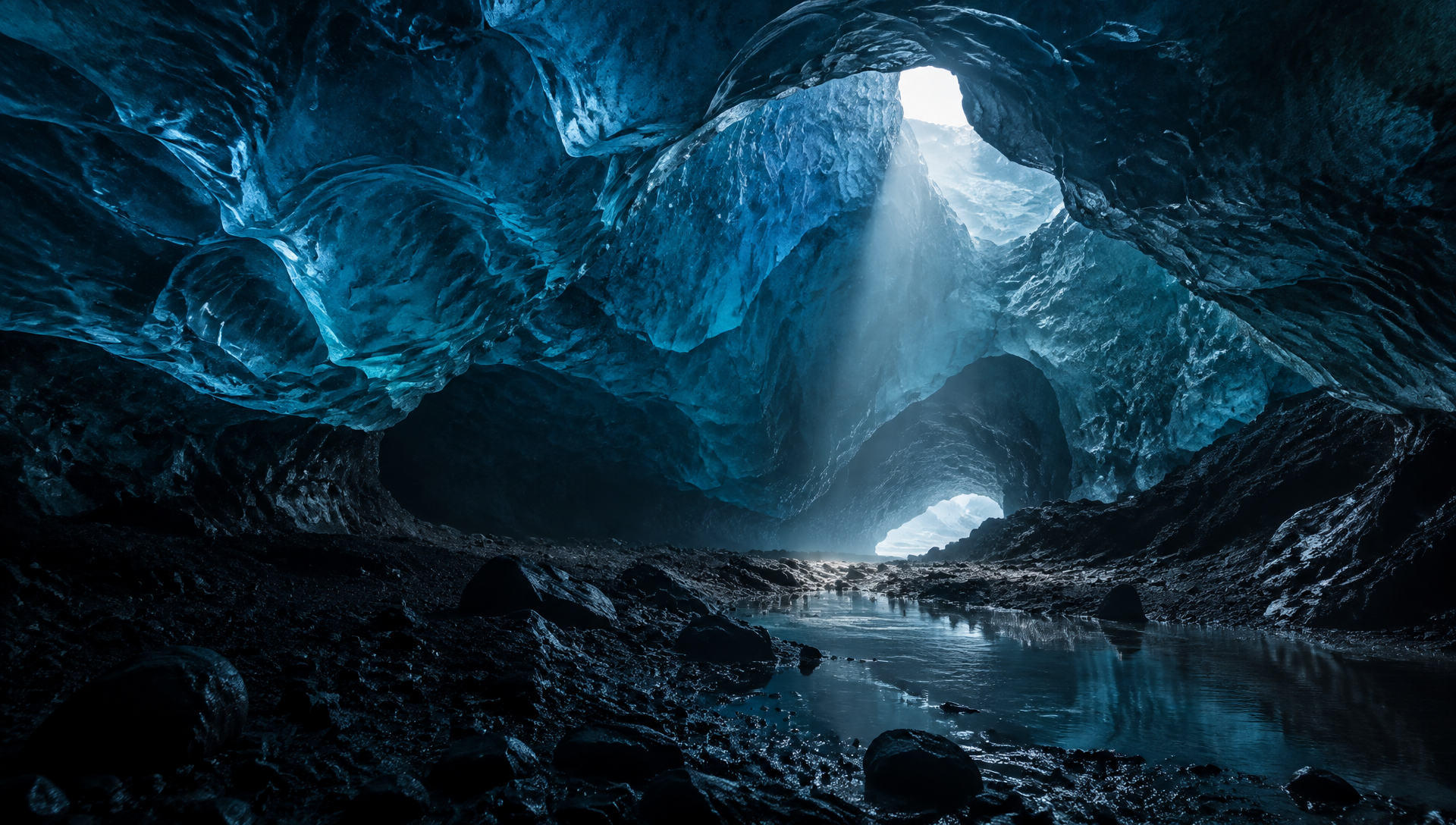
Awe is the emotion you feel before something so vast it doesn't fit into what you already know: the northern lights, a glacier, a sky full of stars. Psychology has studied it for two decades and found that it is one of the emotions that does us the most good.
What is awe?
Psychologists Dacher Keltner and Jonathan Haidt (2003) defined it as the emotion before something vast that forces us to rearrange what we understand about the world. Nature is one of its most powerful sources.
What does it do to the body?
Stellar and colleagues (2015) found that people who often feel awe have lower levels of interleukin-6, an inflammation marker associated with chronic disease.
Why does it change perspective?
In front of a glacier you feel small, and that's a good thing. Piff and colleagues (2015) described this as the "small self" effect: people who feel awe become more generous and less self-focused. Rudd, Vohs and Aaker (2012) also found that awe expands the perception of time: the feeling of not having enough of it fades.
Where do you feel the most awe?
In places that photos can't explain: the auroras of Iceland, the icebergs of Greenland, the white landscapes of Antarctica.
Frequently asked questions
- What is awe?
- It's the emotion before something vast that goes beyond what we know.
- Does awe have health benefits?
- It is associated with less inflammation, more wellbeing and less sense of hurry.
- Do you need to travel far to feel it?
- Not always, but extreme and remote landscapes provoke it much more intensely.
Related trips


Keep reading
This article is for information only and does not replace consultation with a health professional.
Sources
- Keltner, D. y Haidt, J. (2003). Approaching awe, a moral, spiritual, and aesthetic emotion. Cognition and Emotion.
- Stellar, J. E. et al. (2015). Positive affect and markers of inflammation. Emotion.
- Piff, P. K. et al. (2015). Awe, the small self, and prosocial behavior. Journal of Personality and Social Psychology.
- Rudd, M., Vohs, K. D. y Aaker, J. (2012). Awe expands people's perception of time, alters decision making, and enhances well-being. Psychological Science.