Short answer. The most popular times are March to May and September to November. But winter, from December to February, is an excellent option for clear skies, few visitors and black-necked cranes.
Spring (March to May)
Flowers, good birdwatching opportunities and some festivals. This is high season.
Summer (June to August)
Very green valleys and alpine flowers, but also the monsoon, with rain particularly in the afternoons. Landslides and delays on roads and flights are possible, and the cranes are absent.
Autumn (September to November)
Harvest time, generally clear skies and visible mountains. This is high season.
Winter (December to February)
- Weather: dry, sunny days. Daytime temperatures in Paro and Thimphu range from 9 to 17°C, while nights can fall below freezing. Punakha stays mild.
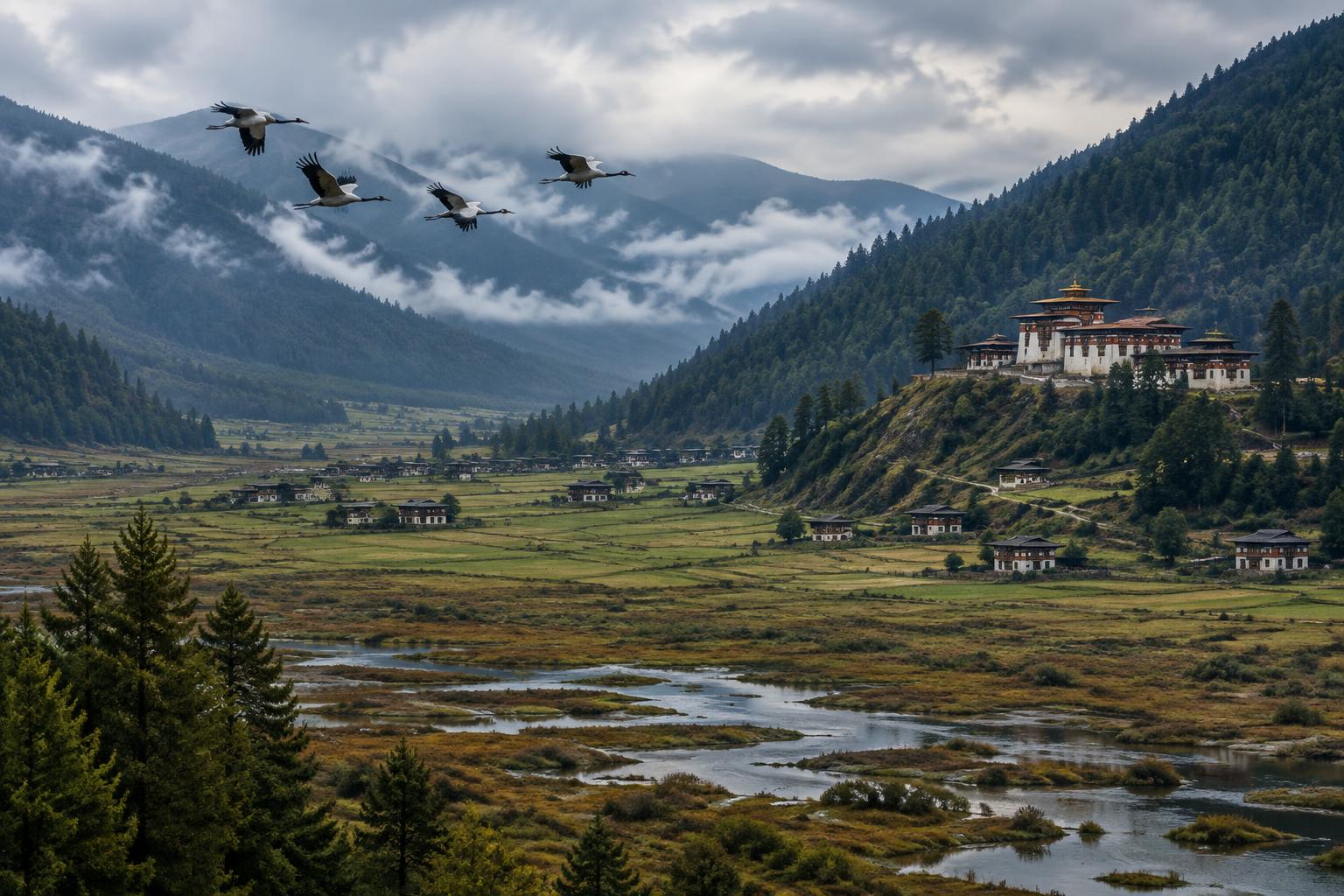
- Black-necked cranes: present in Phobjikha Valley, Gangtey, from late October to mid-February.
- Views: on clear days, the Himalayan range is visible from Dochu-la pass.
- Festivals: Druk Wangyel Tshechu takes place on 13 December at Dochu-la pass, and Punakha's festival is held in February.
- Visitor numbers: low season, with few tourists.
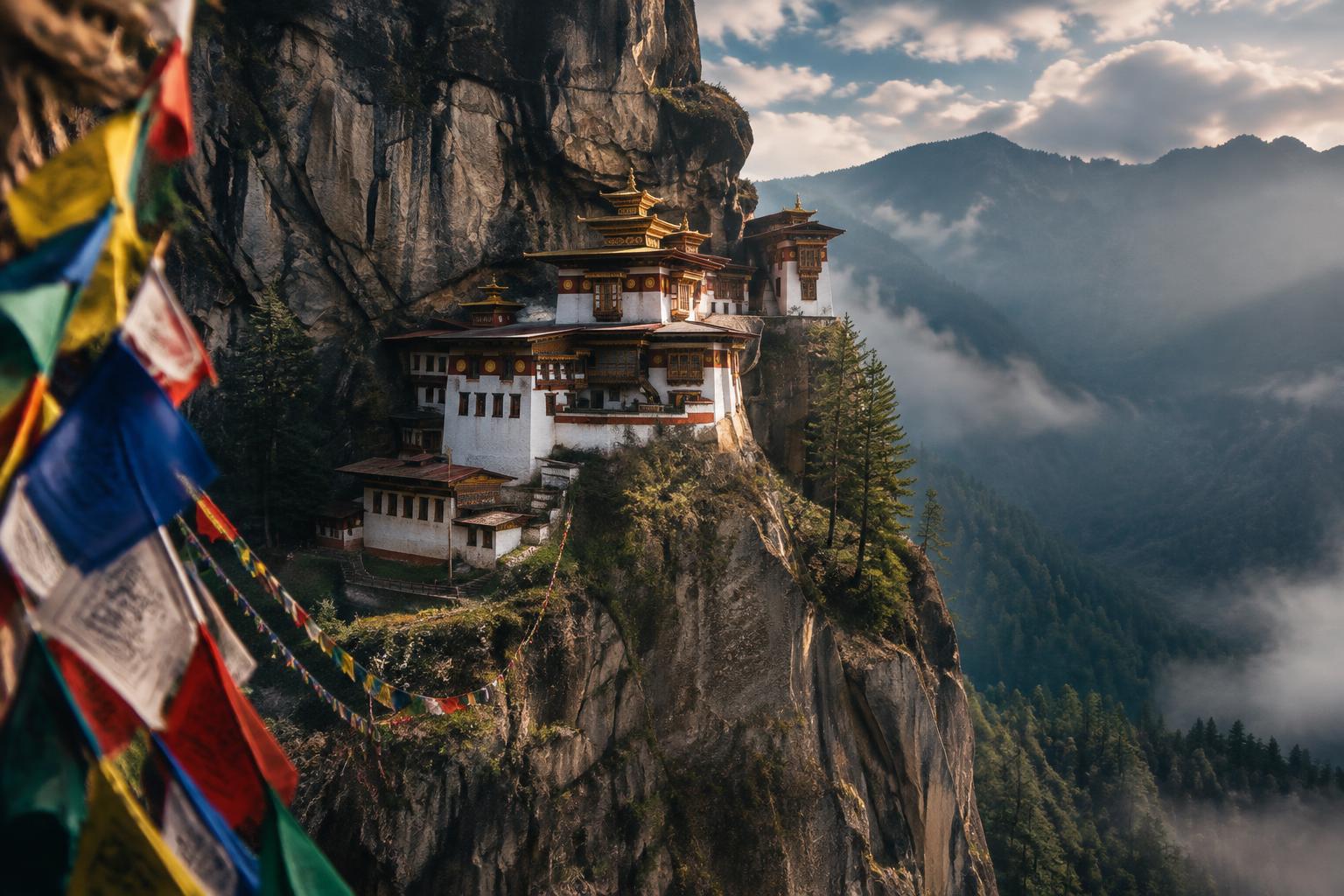
- Tiger's Nest: open year-round. The upper steps may be icy in winter.
Why did we choose December for our trip?
Our trip runs from 1 to 10 December 2027. We visit Gangtey while the cranes are present, cross Dochu-la with clear views and arrive before the busier mid-month dates.
View the Bhutan trip